Mr. Jesse, a high school math teacher, has been selected as an AP Statistics Reader by the College Board, highlighting the strength of our AP program and commitment to academic excellence.


Mr. Jesse, a high school math teacher, has been selected as an AP Statistics Reader by the College Board, highlighting the strength of our AP program and commitment to academic excellence.

Mr. Jesse Aguilar
AP Statistics Teacher
Mathletes Coach
We are proud to share that Mr. Jesse, one of our High School math teachers and Mathletes coach, has been selected to serve as an AP Statistics Reader this summer by the College Board. This distinction not only recognizes his expertise and professionalism, but also highlights the strength of our AP program and our commitment to academic excellence.
But what does it mean to be an AP Reader, and why is it such an honor?
Each year, the College Board organizes the AP Reading, a large-scale evaluation event where thousands of AP teachers and college faculty gather to score free-response questions from AP Exams. Over the course of the Reading, millions of student responses are carefully evaluated using standardized scoring guidelines.
AP Readers are responsible for:
Scoring free-response exam questions
Applying detailed rubrics consistently and accurately
Participating in training sessions to calibrate scoring standards
Collaborating with educators from around the world
Readers gain deep insight into how exams are constructed, how responses are evaluated, and what distinguishes a high-scoring answer from an average one.
Serving as an AP Reader is a professional honor. Teachers must apply and are selected based on several criteria, including:
Experience teaching the specific AP course
Demonstrated expertise in the subject area
Strong understanding of AP curriculum standards
Recommendations and professional qualifications
The College Board seeks experienced, highly effective educators who can accurately and fairly evaluate student work. Selection reflects both subject mastery and professional trust.
Being chosen places Mr. Jesse among a respected community of educators who help maintain the integrity and rigor of the AP program worldwide.
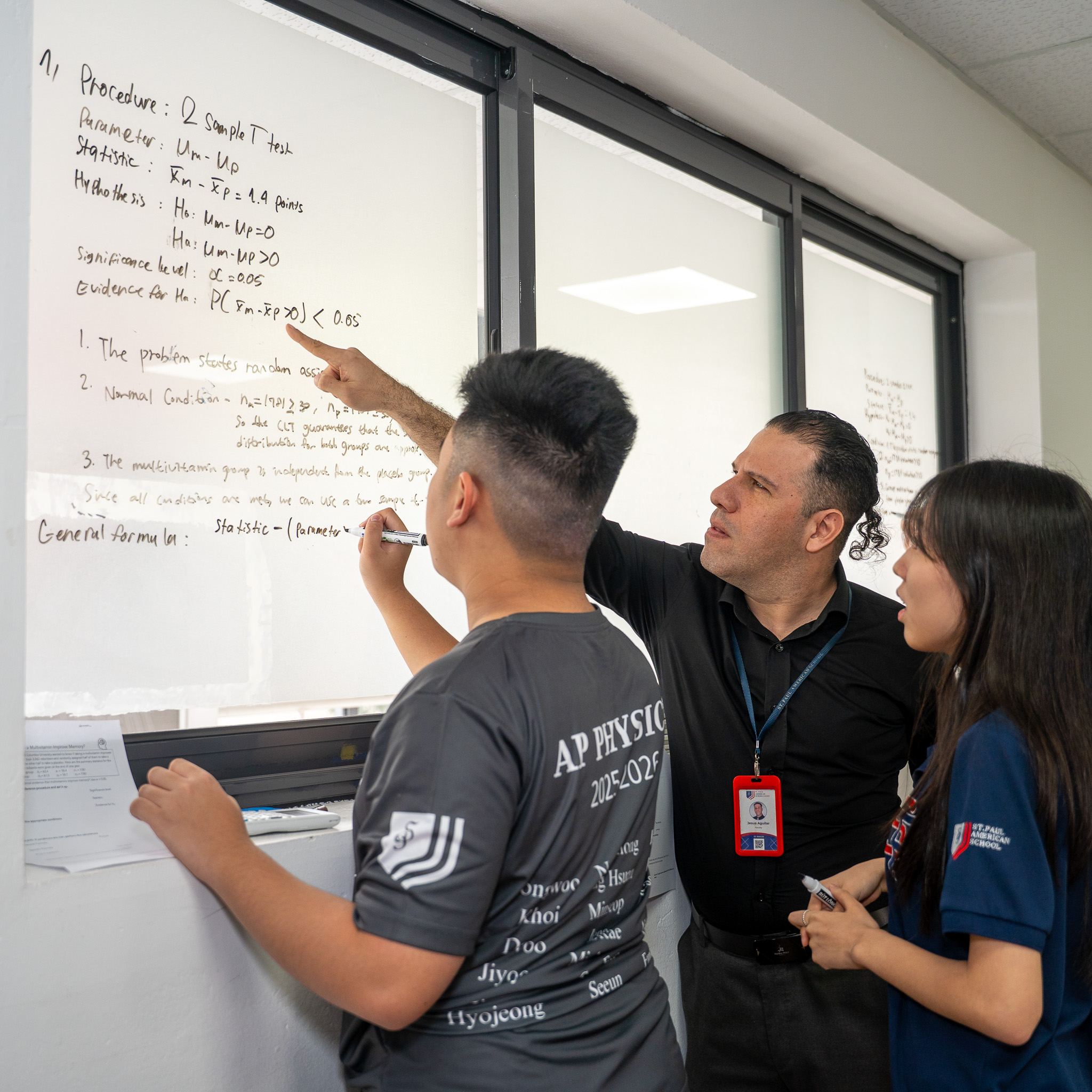
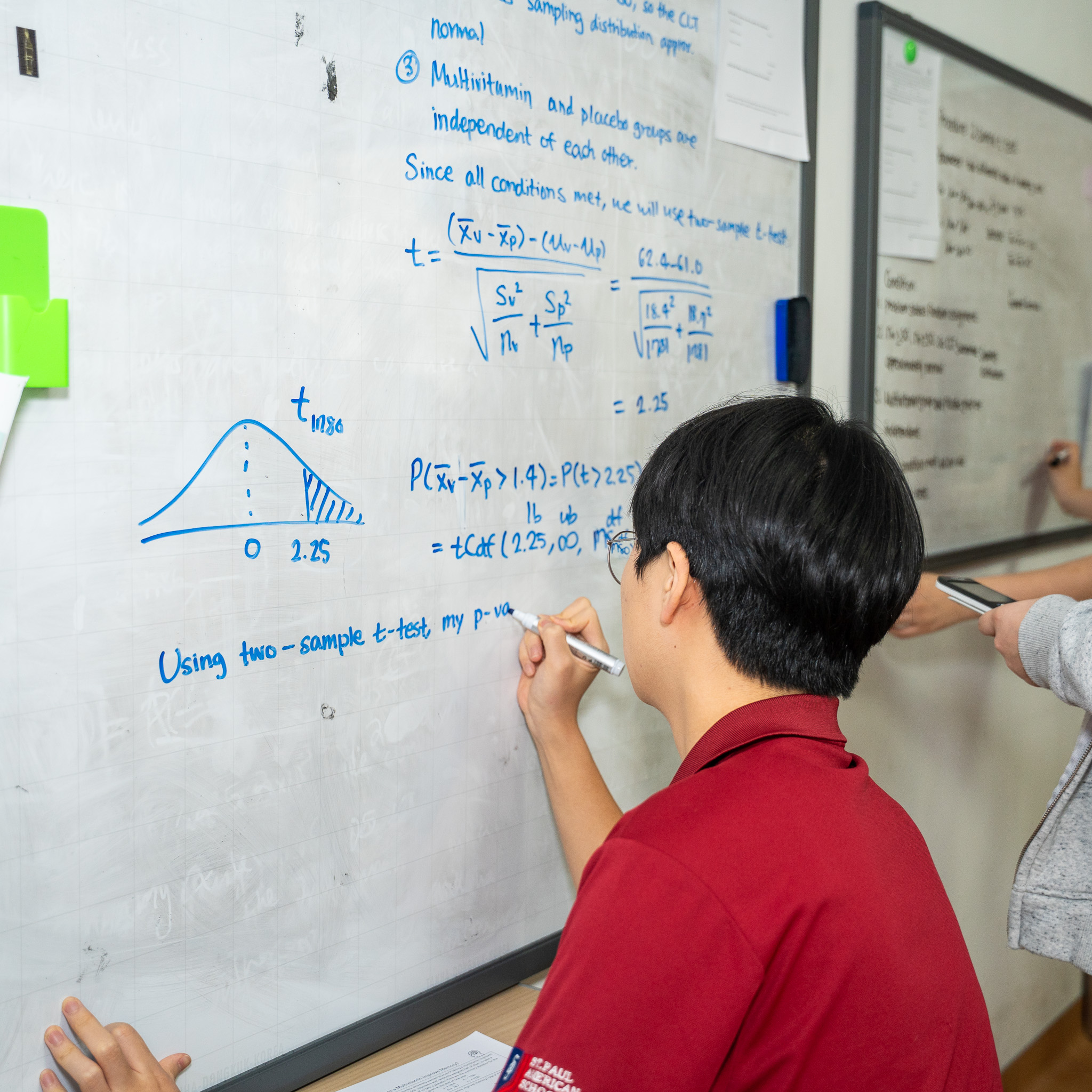
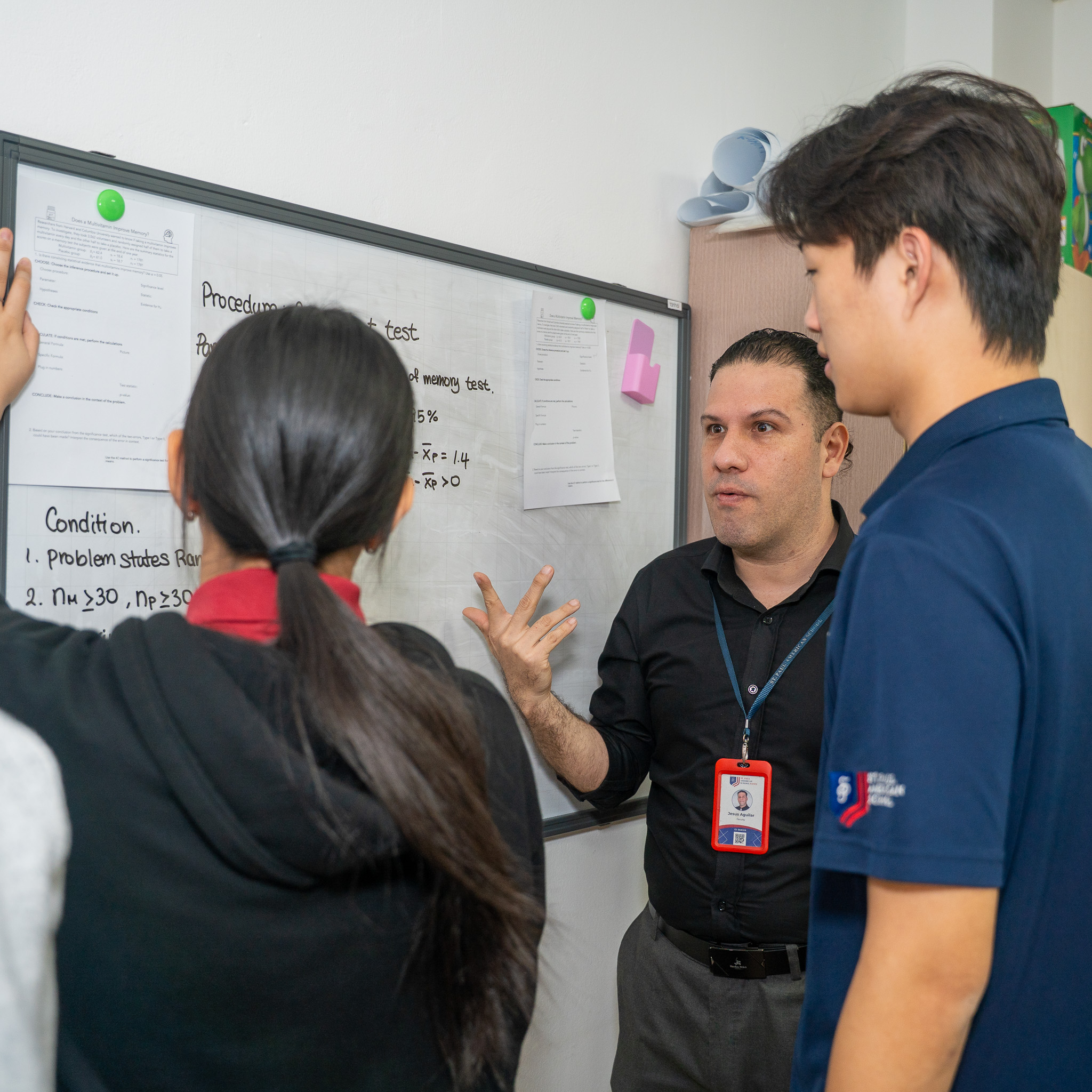
The AP Statistics course is equivalent to a one-semester, introductory, non-calculus-based college course in statistics. It introduces students to the major concepts and tools for collecting, analyzing, and drawing conclusions from data.
The course is built around four core themes:
1. Exploring Data
Students examine patterns and departures from patterns by using graphical and numerical techniques.
2. Sampling and Experimentation
Students learn how to collect data appropriately through surveys and experiments and understand how design impacts conclusions.
3. Anticipating Patterns
Students study probability, random variables, and probability distributions to model real-world situations.
4. Statistical Inference
Students use data to draw conclusions about populations through confidence intervals and hypothesis testing.
Throughout the course, students use technology, investigations, problem solving, and written explanations to build strong conceptual understanding. AP Statistics is not just about formulas, it is about thinking critically, interpreting evidence, and communicating conclusions clearly.

When a teacher serves as an AP Reader, the benefits come directly back to the classroom. Mr. Jesse will return with:
First-hand knowledge of how student responses are scored
Clear insight into common mistakes and high-scoring strategies
A deeper understanding of exam expectations
Enhanced ability to prepare students for success
This experience strengthens instruction, assessment design, and student feedback.
Mr. Jesse’s selection affirms the quality of our AP instruction and the expertise of our faculty. It demonstrates that our teachers are not only preparing students for college-level rigor, but are also contributing at the national level to uphold those standards.
We congratulate Mr. Jesse on this outstanding achievement and look forward to the continued impact of his work on our students’ academic success.